
Dance · 12 January 2026
The quiet ways dance builds confidence in young people
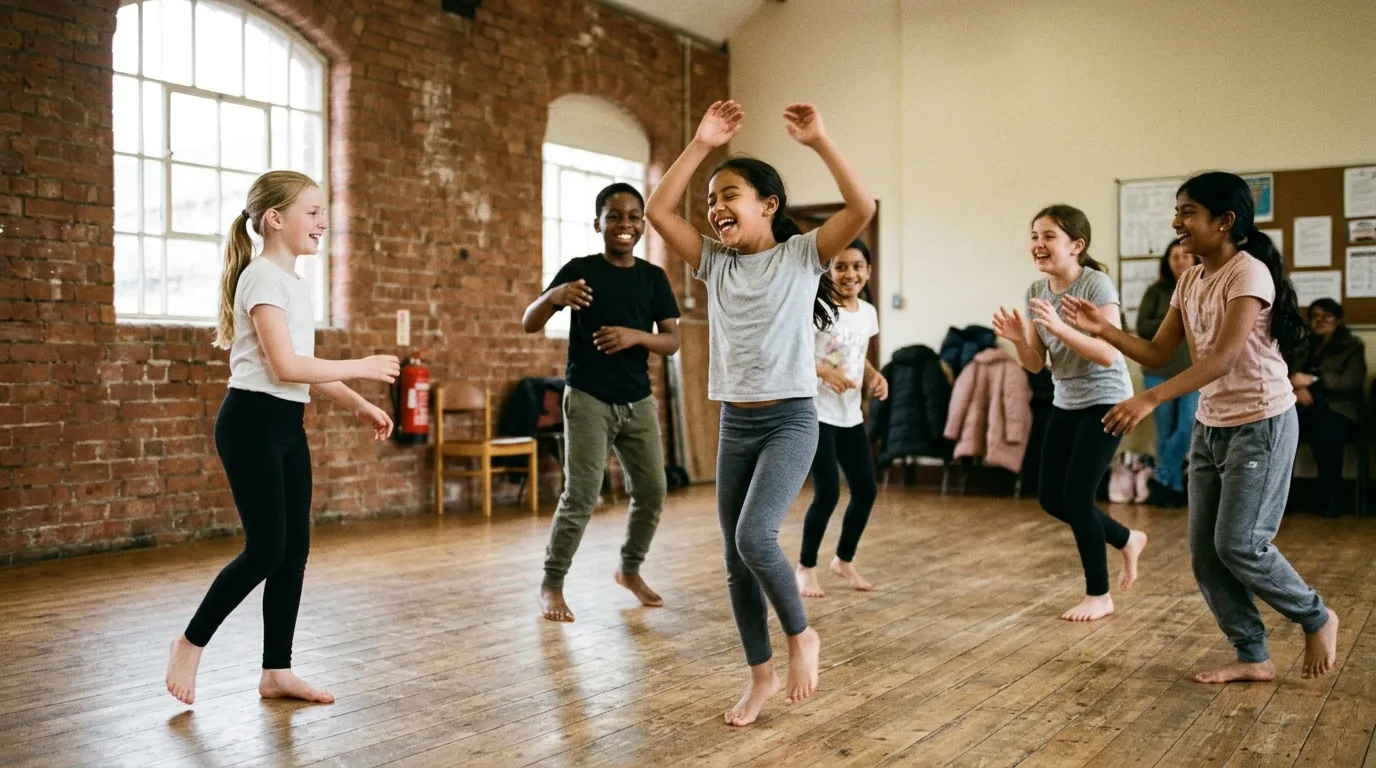
Every Monday evening the same thing happens at the Henry Barran Centre. A girl who has spent the whole day barely saying a word in class walks through our door, gets changed, and by half past six she is leading a group of seven-year-olds through a routine she learnt the week before.
It is easy to look at a dance class and see only the obvious stuff: the exercise, the coordination, the shiny costume at the end of term. Parents are usually happy their child is off a screen and moving. But after twenty-odd years of running sessions in Gipton, we have learnt that the fitness is the least interesting part.
The real change is quieter. It is the boy who stops mumbling and starts making eye contact. The teenager who volunteers to demonstrate in front of everyone, having spent months hiding at the back. The child who finally believes their body belongs to them.
There is solid evidence behind what we see in the hall. The NHS guidance for children and young people aged 5 to 18 asks for an average of at least sixty minutes of activity a day, and it names dance alongside gymnastics and martial arts as the kind of thing that strengthens muscles and bones. But the same guidance also lists what movement does that you cannot measure on a chart: it builds confidence and social skills, improves concentration, and simply makes you feel good.
Research on dance itself points the same way. A review of dance programmes found that children and young people regularly reported gains in self-esteem, self-trust and self-expression, and that dance gave them a way to understand and work through their own feelings without needing the words for them. For a lot of our young people, that last part matters more than any medal.
Not every child wants to talk about how they feel. Most of ours certainly do not. But ask them to show it, in time to music, and something unlocks. One of our teachers puts it plainly: the kids who struggle to sit still in school are often the ones who pick up choreography fastest, because their bodies were never the problem.
If you are thinking about signing a child up, our advice is to lower the stakes. Do not sell them on competitions or exams. Tell them they get to move, with friends, to music they like. The confidence shows up on its own, usually a term later, and usually when nobody is looking for it.
Further reading: the NHS physical activity guidelines for children and young people, and the systematic review of dance interventions published in Frontiers in Psychology (2018).