
Sport · 16 March 2026
Boxing, karate and tumbling: what discipline actually looks like
When a parent first rings us about the karate or boxing sessions, there is usually a pause before the real question comes. It is nearly always some version of the same thing: will it make my child more aggressive?
We understand the worry. Pop culture has spent decades selling a very particular image of martial arts and boxing, and it is mostly shouting. The version that happens in a community hall on a Tuesday evening looks almost nothing like it.
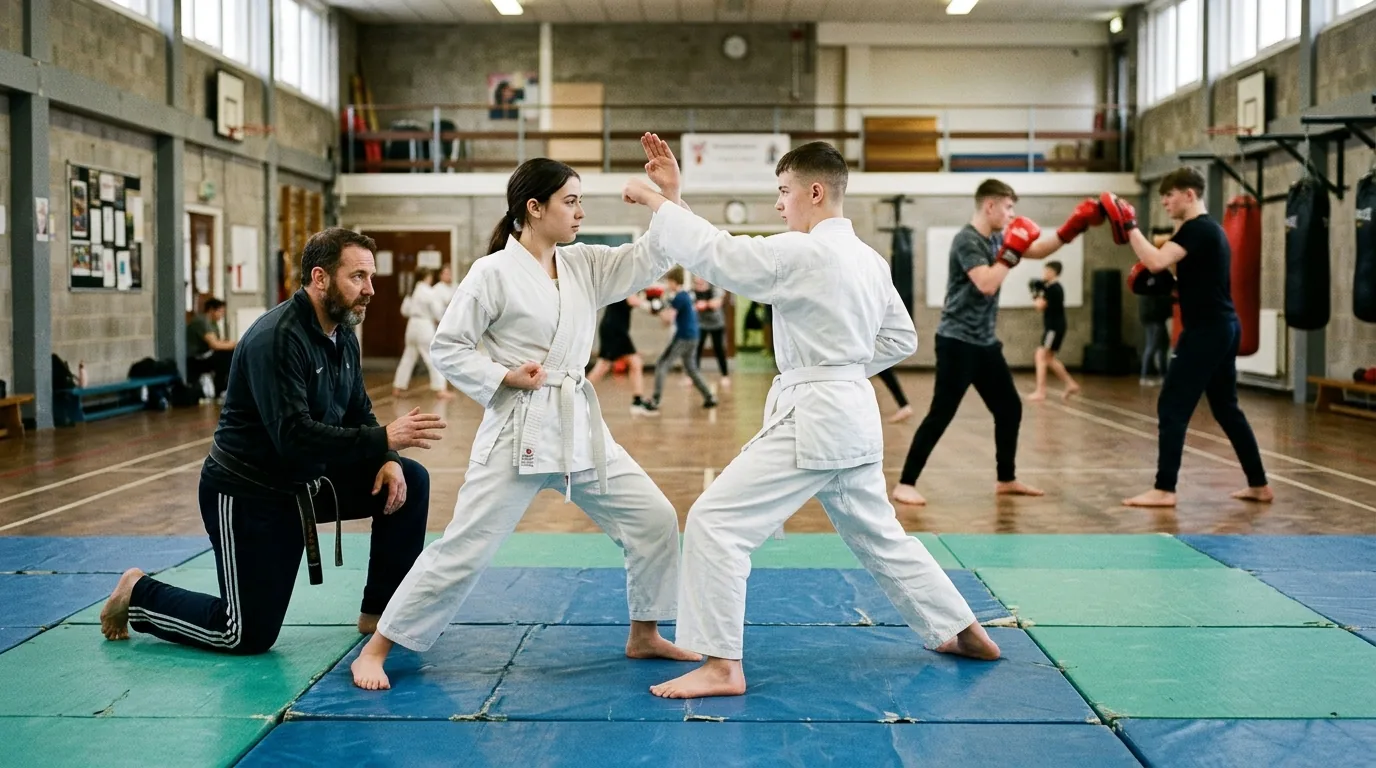
What a visitor actually sees is a room of children bowing before they step on the mat, waiting their turn, and being pulled up not for getting a move wrong but for not paying attention to their partner. The discipline is real, but it is not about fear. It is about learning to control your own body and your own temper, which for a lot of young people is the first time anyone has taught them that directly.
The NHS includes martial arts in its list of activities that build muscle and bone strength for children and young people, alongside gymnastics and jumping. That is the part most people expect. What they notice less is how much of it is mental. To do a kata properly you have to remember a sequence, hold a stance, and stay calm while everyone is watching. You cannot rush it, and you cannot bluff it. That is a useful lesson for a nine-year-old to learn early.
Boxing, done properly, is similar. Our sessions are pad work and fitness with qualified coaches, not free sparring. Young people learn footwork and timing, and they learn that the person holding the pads is a teammate, not an opponent. Energy that used to come out as a scuffle in the playground gets a home. Coaches will tell you the same thing: the children who need boxing the most are often the ones who calm down fastest once they are being challenged physically in a safe, structured way.
The honest caveat is that the research on martial arts is genuinely mixed, and the difference comes down to how it is taught. A good coach builds self-control and respect; a bad one does not. That is why we keep our groups small, keep the sessions led by qualified people, and put the values before the technique. If a child leaves our hall fitter but no kinder, we have not done our job.
For parents wondering whether to start, our advice is to try a couple of sessions and watch how your child behaves afterwards, not just during. The tell is rarely the belt or the badge. It is the small things at home: the shoes put away, the slightly longer fuse, the “thank you” that used to need prompting.
Further reading: the NHS physical activity guidelines for children and young people, and the published review of social and psychological outcomes of martial arts among young people (2010).